How to Disable Start Menu Ads in Windows 11
You paid for Windows, and yet the Start menu suggests apps to install, the lock screen offers tips, and File Explorer nudges you towards a subscription. Microsoft calls these “recommendations” and “suggestions”; most people call them ads. The good news is that almost all of them can be switched off in Settings without any extra software. This guide goes through the built-in switches first, shows a small open-source tool for people who want everything in one place, and explains why some of these come back after a big update.
Promotions inside Start first appeared in preview builds in spring 2024, in the update described in Microsoft’s KB5036980 release notes, and the wording and location of the toggles has shifted a little with later releases. The screenshots here are from Windows 11 on a personal PC; on your version a label may be phrased slightly differently.
Method 1: Turn them off in Settings
Start menu
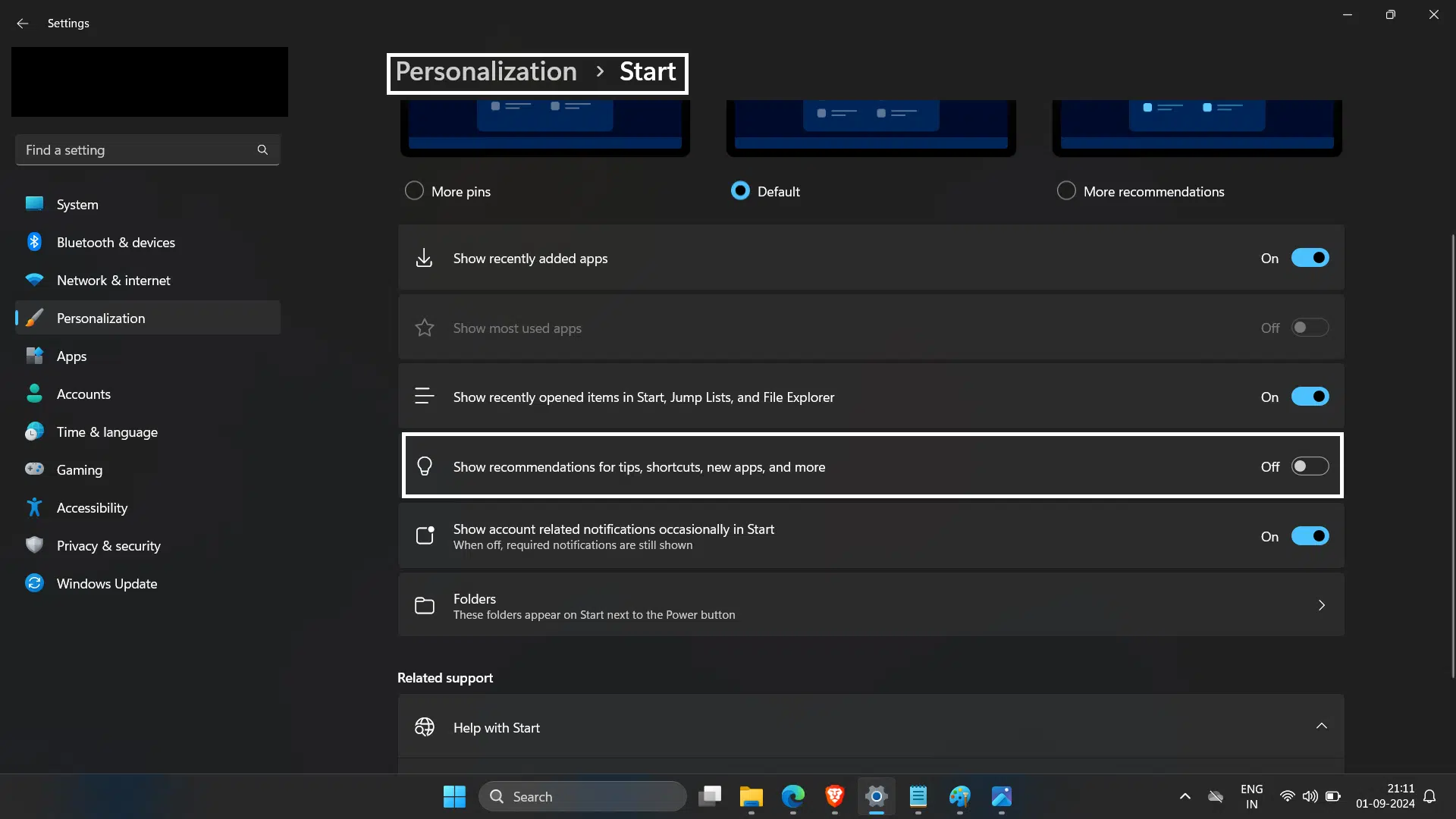
Open Settings and go to Personalization, then Start.
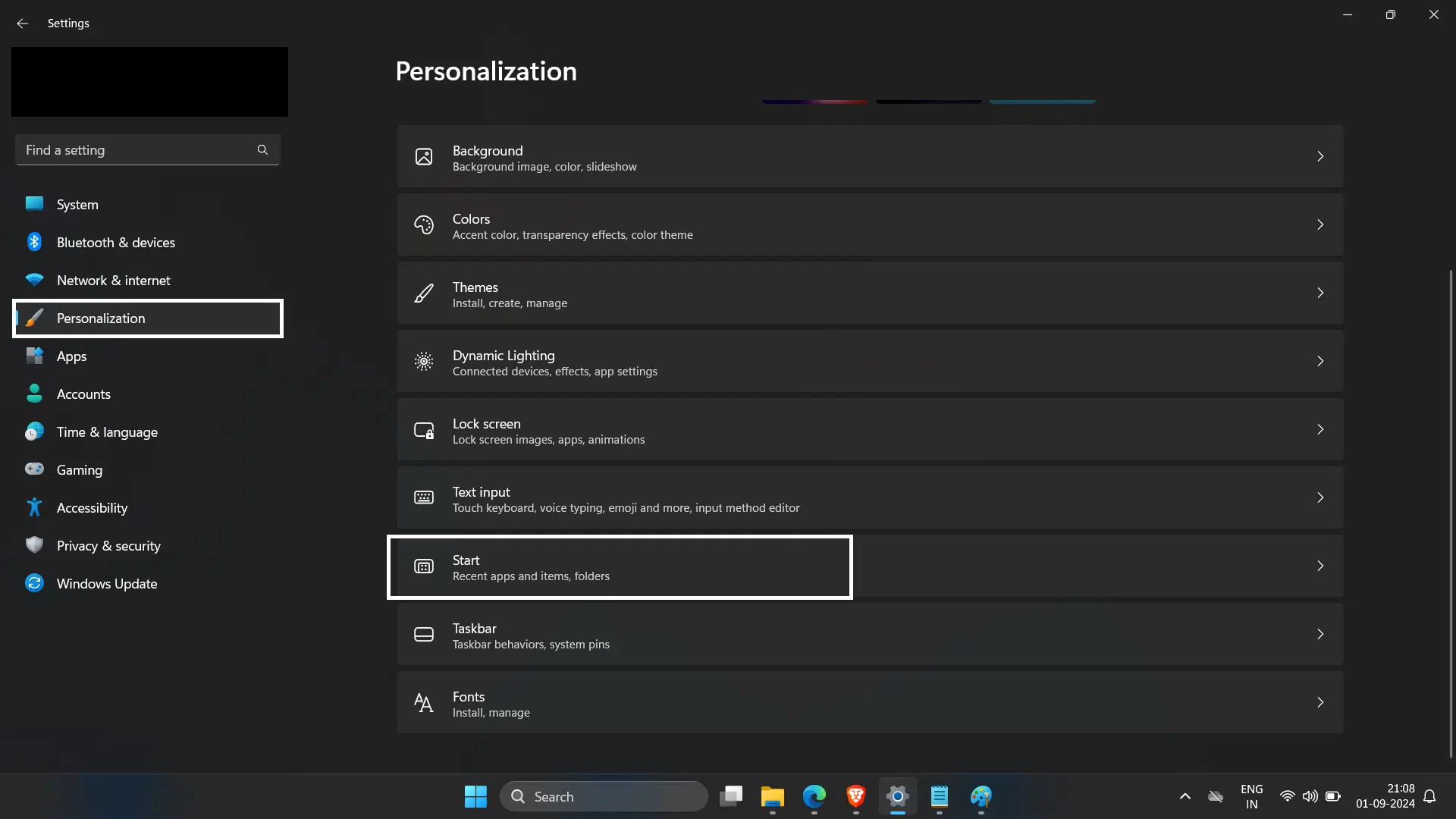
Turn off Show recommendations for tips, shortcuts, new apps, and more. This is the switch that stops promotional and suggested content. If you also want a cleaner Start menu, turn off Show recently added apps and Show recently opened items in Start, Jump Lists, and File Explorer; the last one is a separate setting that also clears recent files in Jump Lists and File Explorer, so you trade some convenience for privacy. How much of the “Recommended” area disappears depends on your Windows 11 version.
Lock screen
Go to Settings, Personalization, Lock screen. Set the lock screen to a Picture or Slideshow instead of Windows Spotlight, and turn off Get fun facts, tips, tricks, and more on your lock screen if it is shown.
Notifications and “tips”
Open Settings, System, Notifications and expand Additional settings. Untick the options for showing the Windows welcome experience after updates, and for suggesting ways to finish setting up the device or getting tips and suggestions when using Windows. In the same page, in the list of senders, turn off any “Suggested” notifications.
Advertising ID and tailored suggestions
Go to Settings, Privacy & security, General (on newer builds this page is called Recommendations & offers) and turn off Let apps show me personalized ads by using my advertising ID and Show me suggested content in the Settings app. Then open Privacy & security, Diagnostics & feedback and turn off Tailored experiences (newer builds may label this Personalized offers), which controls whether your diagnostic data is used to personalise tips and suggestions.
File Explorer
The banners in File Explorer that promote OneDrive or Microsoft 365 are controlled by folder options. In File Explorer choose the three dots, then Options, open the View tab and untick Show sync provider notifications.
Method 2: Use the OFGB tool
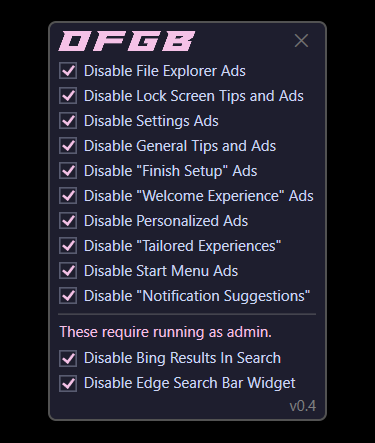
Going through five settings pages works, but it is easy to miss one. OFGB is a small free and open-source utility (public-domain licence) that changes the relevant Windows registry values through a simple window of tick boxes. Its list covers File Explorer ads, lock screen tips and ads, Settings ads, general tips and ads, “Finish setup” ads, “Welcome experience” ads, personalised ads, “Tailored experiences”, Start menu ads and notification suggestions, plus two options that need administrator rights: Bing results in search and the Edge search bar widget.
Using it safely
- Download it only from the project’s GitHub releases page. The developer warns that GitHub is the only official source and cannot vouch for copies on other sites, and this is exactly the kind of small utility that fake download sites like to bundle with malware.
- Create a restore point first (search “Create a restore point” in the Start menu), because the tool edits the registry.
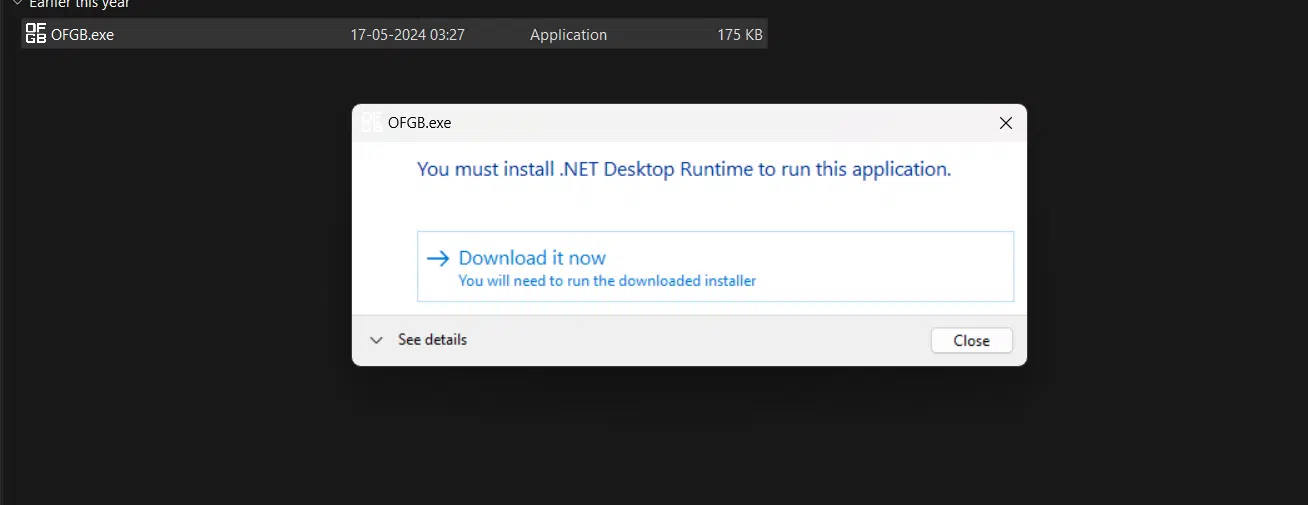
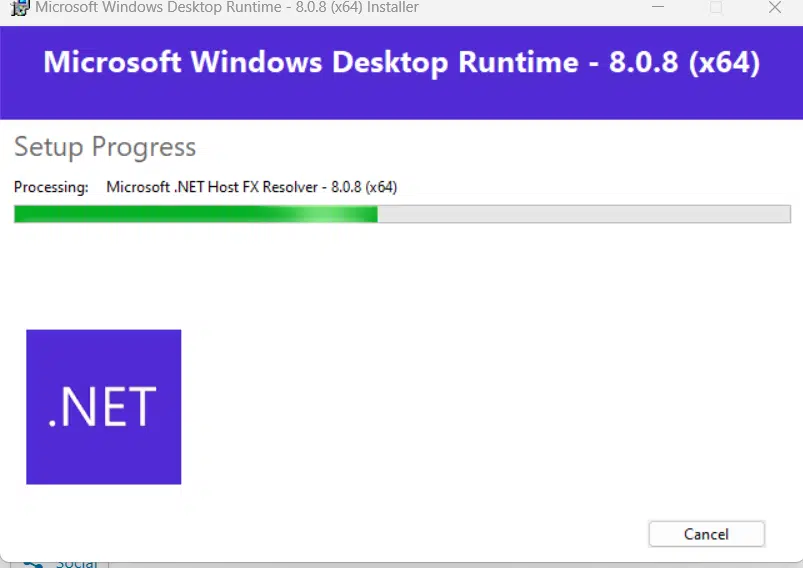
- Install the .NET Desktop Runtime if asked. The tool is built on .NET, and Windows shows a prompt if the runtime is missing. Choose Download it now, which takes you to Microsoft’s own download.
- Run OFGB, tick the options you want and close it. Run it as administrator so the two admin-only options can be applied. If a change does not show up straight away, sign out or restart.
Why the ads sometimes come back
Feature updates can reset some of these settings to their defaults, and Microsoft occasionally adds a new promotional surface with its own toggle. If the Start menu suggestions return after a big update, check the toggles above again, and re-run OFGB if you use it.
Managing many PCs: Group Policy
Administrators can control several of these behaviours with policy. The Cloud Content policies under Computer Configuration, Administrative Templates, Windows Components (for example “Do not show Windows tips” and the Spotlight-related settings) and the Experience policies in the Windows policy CSP cover consumer experiences and tips. Some of them apply only to certain Windows editions, so check Microsoft’s policy reference for the exact behaviour on yours before relying on them.
Common questions
Is it safe to turn these off?
Yes. They are personalisation and promotion features, not security ones. Turning them off does not affect Windows Update or Defender.
Will this remove apps that Windows already installed?
No. It only stops suggestions and promotions. Sponsored apps that were pre-installed by the manufacturer or a previous suggestion stay until you uninstall them from Settings, Apps.
Can I undo OFGB’s changes?
Untick the options and re-apply, or use the restore point you created before running it.
Keep reading
- Top 5 Windows Security Tips to Protect Your PC From Malware — More ways to tighten up Windows.
- Fix “wmic is not recognized” on Windows 11 — Another Windows 11 change that breaks old habits.
- How to Change Display Language in Windows 10 and 11 — Another Windows setting made simple.