Linux SysAdmin Interview Scenarios Hiring Managers Want
Hiring managers rarely want textbook definitions. They want to hear your hands move: what you check first, what you won’t do under panic, and how you communicate while the incident is hot.
Use these scenarios as verbal drills. Build the muscle in a cheap lab, then connect answers to real playbooks on this site.
How to structure any answer (30–90 seconds)
- Stabilize — what I do so we don’t make it worse
- Triage order — first three checks
- Likely causes — ranked, not fifteen hypotheses
- Fix + verify — how I know it’s healthy
- Follow-up — monitor, postmortem note, prevention
Speak like a teammate on a bridge call, not a blog outro.
Scenario drills
Each scenario follows the same shape: stabilise, check in order, say it out loud. Rehearse them with the matching playbook open in another tab.
Scenario: disk is 100% on production
Stabilize: No blind reboot; no random rm -rf.
Checks: df -hT, df -i, then du on the full mount, then lsof for deleted-open files.
Talk track: “I’d confirm capacity vs inodes, find the fat directory, check for deleted files still held open, clear safely, then fix logrotate or the writer.” Point to your practice with disk full triage.
Scenario: SSH permission denied (publickey)
Stabilize: Keep a console/VNC session before changing sshd_config.
Checks: correct key, server authorized_keys modes, sshd logs, SELinux contexts on some distros.
Talk track: Walk publickey denied and mention hardening goals from SSH hardening without bragging about locking yourself out.
Scenario: service failed after deploy
Checks: systemctl status, journalctl -u, recent package changes, port binds.
Talk track: “I read the unit and journal before restarting in a loop.” Tie to failed unit and systemd for new admins.
Scenario: site is down — 502
Explain reverse proxy vs upstream. Check upstream socket/port, app process, timeouts. Playbook: nginx 502. Mention TLS only if symptoms match — cert expiry.
Scenario: DNS works on my laptop, not on the server
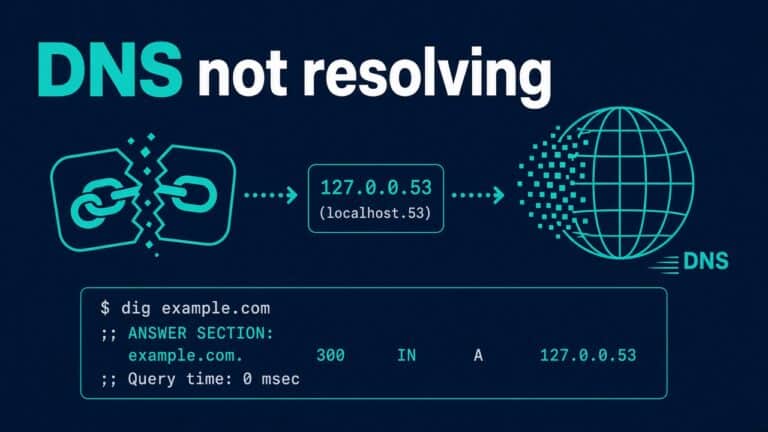
Compare resolvers, split DNS, search domains, and whether the app uses a different path. Checklist: DNS not resolving. Bonus points for getent vs dig differences.
Scenario: load average high, CPU looks idle
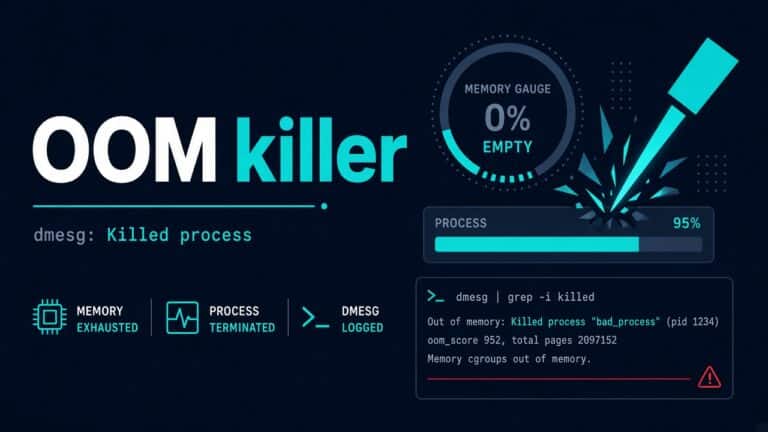
Show you know load ≠ CPU%. Talk uninterruptible sleep, disk, NFS. Post: load average. Mention memory pressure / OOM if relevant: OOM killer.
Scenario: cron didn’t run
Absolute paths, env, permissions, daemon alive, overlapping jobs. cron checklist + safe wrapping.
Scenario: “How do you harden a fresh VM?”
Users, SSH keys, updates, firewall defaults, logging, backups. Point to bootcamp path bootcamp and security baseline module security baseline. Stay high-level — no exploit talk.
Scenario: permissions / “it works as root”
Process user, path components (namei), group membership, MAC layer. permissions post, SELinux.
Scenario: “Walk me through your home lab”
Don’t list tools. Tell a story: two VMs, a break you caused, the journal line that saved you, the note you wrote after. Point to habits from lab setup. Mention bootcamp modules if you’ve followed them — bootcamp hub.
Scenario: package update broke an app
Talk change management: what upgraded, how you found it (dnf history / dpkg logs), whether you roll back, snapshot, or pin. Reference apt/dnf like an admin. Avoid blaming “Linux” as a monolith.
Scenario: can you script this?
Offer a small Bash outline: set strict mode, log to a file, exit codes, no secrets in git. Point to Bash for sysadmins and logging and error handling. Emphasize readable automation over clever one-liners.
Scenario: security baseline on a new host
Stay defensive and high-level: patching, least privilege users, SSH keys, firewall defaults, logging/monitoring, backups. Link your learning path to security baseline module. Decline anything that sounds like “how would you attack X.”
Scenario: API is slow / timing out
Separate DNS, TCP connect, TLS, app time, dependency time. Mention health endpoints and timeouts from an ops view — API security basics, healthchecks. You don’t need to be a developer to isolate the layer.
Soft skills and habits
The technical answer is only part of what gets scored.
Soft skills they score quietly
- You ask for blast radius and SLAs before heroics
- You write down commands in the ticket
- You know when to escalate
- You don’t pretend to know Kubernetes internals after one kind cluster
Career framing beyond L1: SysAdmin→DevOps roadmap. Learning worth it? Is Linux worth learning in 2026.
Practice method
- Pick three scenarios weekly
- Answer aloud against a timer
- Fix gaps in the lab the same evening
- Keep a brag doc of incidents you simulated
Red flags in your own answers
- Jumping to reboot as step one every time
- No verification step after a fix
- Claiming expertise you can’t demo in the lab
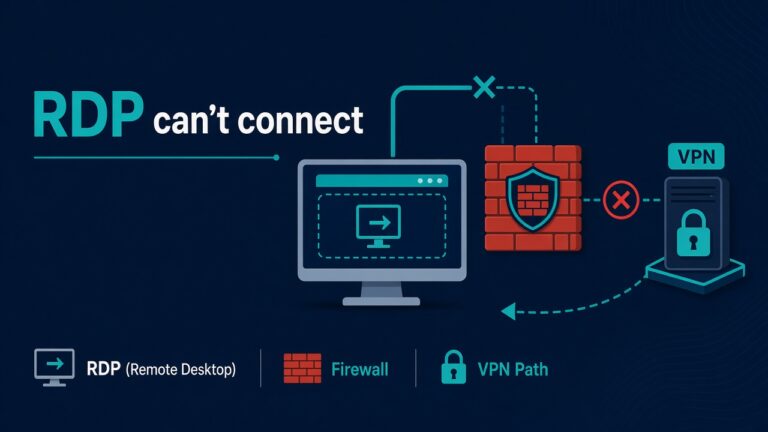
- Dismissing Windows/cloud as “not real ops” (many shops are mixed — even RDP tickets exist: RDP checklist)
Building a personal question bank
After each mock interview, write the question you missed and lab it within 48 hours. Tie each to a post on this site so your notes have depth. Observability questions? Module 8. Backup questions? Module 7.
Confidence is a side effect of reps. Schedule reps like cron — and if cron is flaky, you know where to look.
Around the interview itself
A few things that come up before, during and after the questions.
Panel dynamics
If two interviewers disagree, don’t play referee. Clarify the scenario constraints and proceed. Ask whether production access is assumed, what the SLA is, and whether customer impact is already public. Constraints change triage.
Take-home labs
Some companies email a broken VM. Treat it like a ticket: timeline notes, commands captured, minimal changes, summary at the top. Link your reasoning to public playbooks you trust — disk, DNS, systemd — without pasting copyrighted courseware into the report.
Salary-adjacent honesty
If they ask what you don’t know, name it and name your learning plan. “I haven’t run Kubernetes in anger; I have strong Linux troubleshooting and I’m following this roadmap” lands better than fake fluency. Point to the roadmap and your lab.
Culture signals
Ask them how handoffs work, how blameless their postmortems are, and whether juniors get console access for learning. You’re interviewing them too. Shops that punish questions train people to hide mistakes until outages bloom.
After the interview
Same day: write every technical question you remember. Lab the weak ones within a week. Update notes. The compounding loop matters more than any single “yes.”
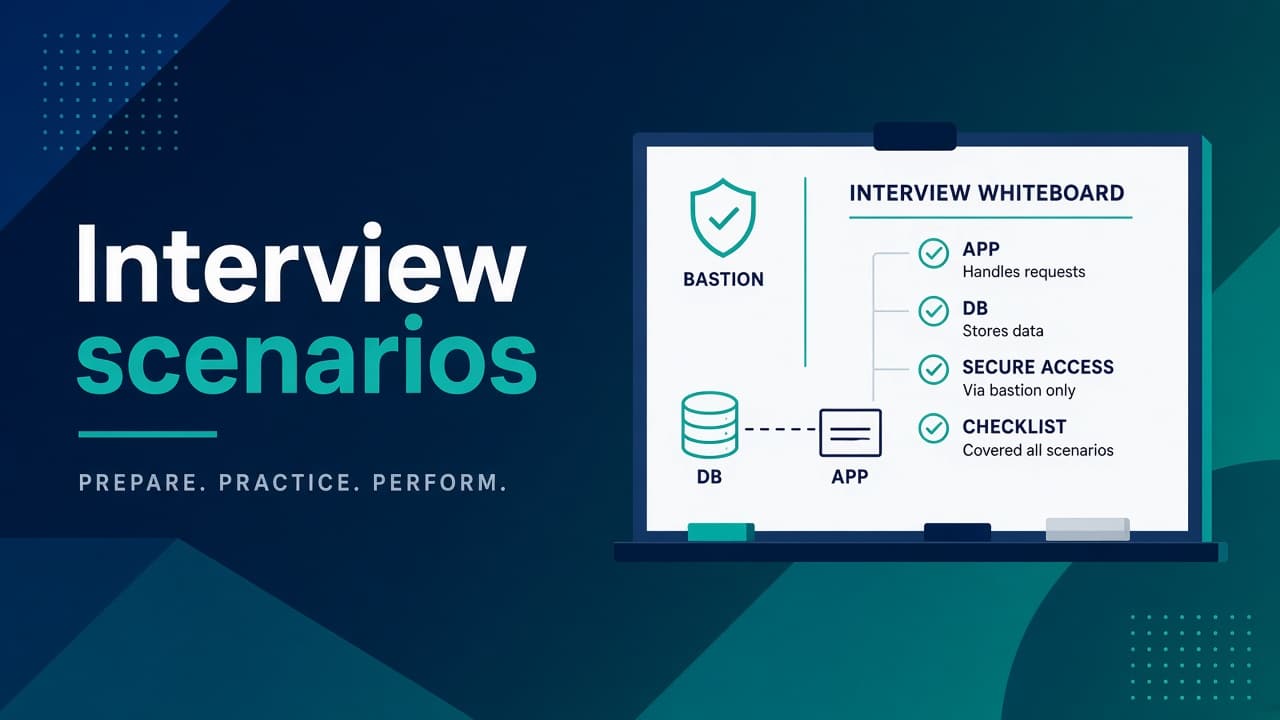
Whiteboard network diagram
Be ready to sketch: laptop → bastion → app → db, with ports and trust boundaries. Ugly boxes beat vague waves. Mention where TLS terminates and where healthchecks hit. Ops-minded diagrams show ownership, not just packets.
If they ask about API risks at a high level, stay defensive: auth, TLS, rate limits, inventory — see API security basics and OWASP API Top 10 ops view. No exploit storytelling.
Closing the loop in answers
End scenarios with verification and prevention. “I’d watch error rate for fifteen minutes and open a task to add a disk alert.” Closing the loop signals senior thinking even if you’re junior on paper. Managers hire that instinct.
Record yourself answering one scenario weekly. Cringe is fuel. Clarity improves fast when you hear your own filler words.
Keep a one-page cheat sheet of your top ten scenarios with three bullets each. Paper beats panic when the call starts early and the chai is still brewing.
FAQ
Will they ask commands exactly?
Sometimes. Prefer explaining why a command is next. Exact flags without judgment sound brittle.
What about coding rounds?
Light Bash is common — Bash for sysadmins. Don’t confuse ops scripting with CTF puzzles.
Certifications?
Helpful signals; scenarios still decide. Lab stories beat logo walls.
Interviews reward calm order. Rehearse the order until it’s boring — boring is hireable.